I'm amazed I still have lungs
Dec. 6th, 2018 02:26 pm![[personal profile]](https://www.dreamwidth.org/img/silk/identity/user.png) offcntr
offcntrAmong the photos found in boxes buried was a black-and-white series from my graduate school days, recording an Advanced Ceramics class clay mix. We'd begin by dry-mixing hundreds of pounds of clay and minerals on a table-top in a 2x6 frame. Afterwards, we'd add blunged, screened slip from the recycle buckets, mix by hand, knead into a solid mass, then run it through the pug mill. In a three-hour class, we'd mix up a ton-and-a-half of clay, with time to clean up the shop and pose for a group picture at the end.
In retrospect, it was horribly unsafe. All that silica-bearing dust in the air, and us in cheap, disposable dust masks. (Even worse for those of us with beards, as dust-laden air gets in around the edges of the mask.) But it was a great team-building exercise; we had a read feeling of accomplishment, knowing we'd made the entire term's supply of clay in that three-hour class.
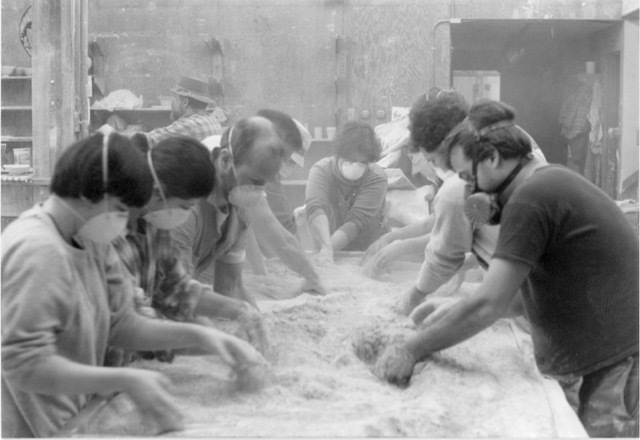
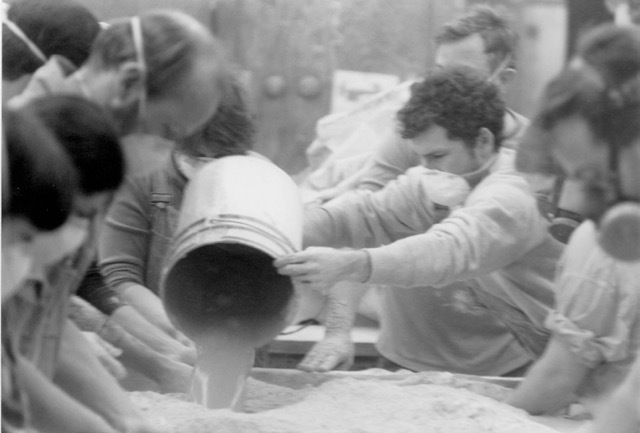
First add the dry ingredients, fifty-pound bags of fireclay (Greenstripe, Lincoln), ball clay (OM4, I think), Custer feldspar and talc as body fluxes. Possibly some silica, too, I'm not sure at this late date what went into a cone 6 stoneware. Then add the glop, five-gallon buckets of recycled clay slip.
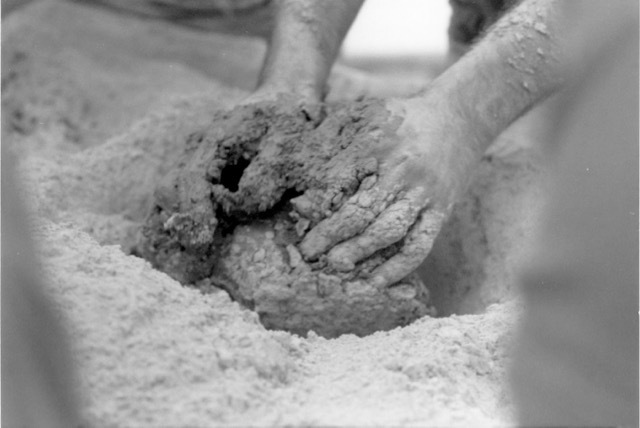
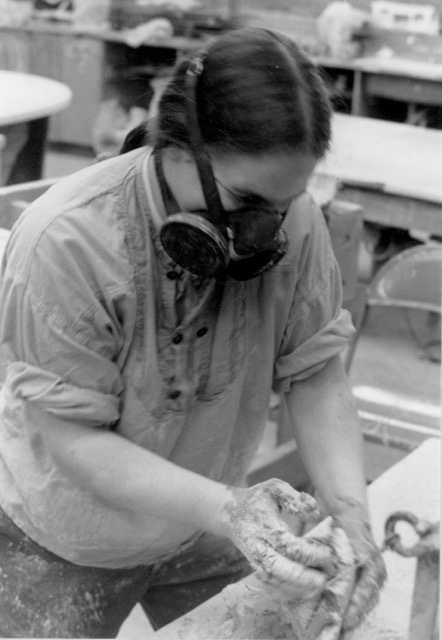
Afterwards, it's like making egg noodles from scratch, everybody makes a well in the flour, pulls in some egg, mixes and kneads.
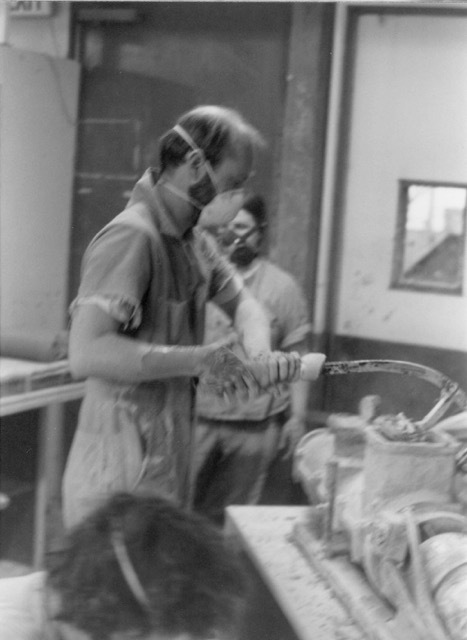
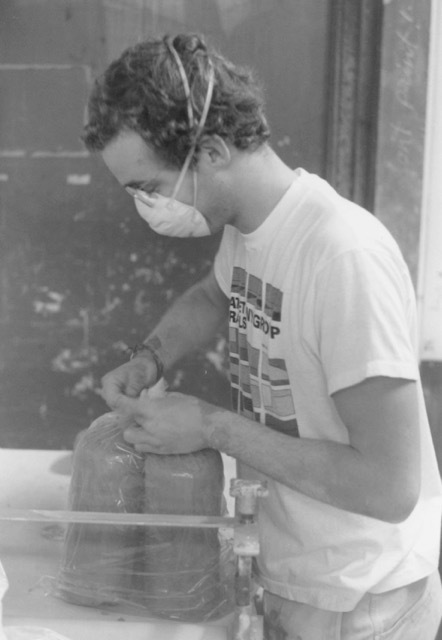
Lumpy, uneven balls of clay get rolled in more dry mix and run through the pug mill, then bagged for aging and eventual use.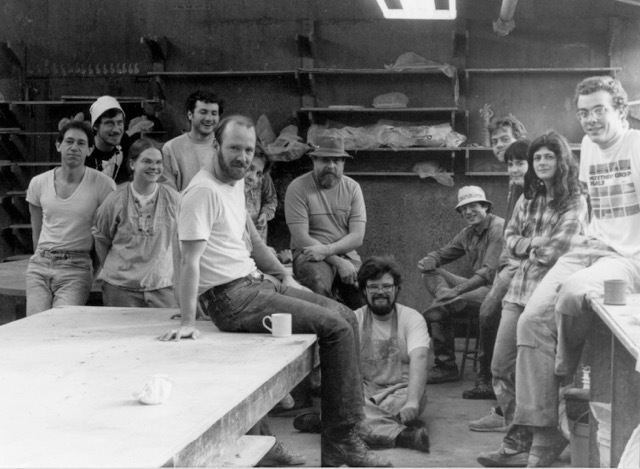
Last of all, clean up and try not to look too exhausted for the group photo.
In retrospect, it was horribly unsafe. All that silica-bearing dust in the air, and us in cheap, disposable dust masks. (Even worse for those of us with beards, as dust-laden air gets in around the edges of the mask.) But it was a great team-building exercise; we had a read feeling of accomplishment, knowing we'd made the entire term's supply of clay in that three-hour class.
First add the dry ingredients, fifty-pound bags of fireclay (Greenstripe, Lincoln), ball clay (OM4, I think), Custer feldspar and talc as body fluxes. Possibly some silica, too, I'm not sure at this late date what went into a cone 6 stoneware. Then add the glop, five-gallon buckets of recycled clay slip.
Afterwards, it's like making egg noodles from scratch, everybody makes a well in the flour, pulls in some egg, mixes and kneads.
Lumpy, uneven balls of clay get rolled in more dry mix and run through the pug mill, then bagged for aging and eventual use.
Last of all, clean up and try not to look too exhausted for the group photo.